








Some of you who have small children may have perhaps been put in the
embarrassing position of being unable to do your child's arithmetic homework
because of the current revolution in mathematics teaching known as the New
Math. So as a public service here tonight I thought I would offer a brief
lesson in the New Math. Tonight we're going to cover subtraction. This is the
first room I've worked for a while that didn't have a blackboard so we will
have to make due with more primitive visual aids, as they say in the "ed biz."
Consider the following subtraction problem, which I will put up here: 342 -
173.
Now remember how we used to do that. three from two is nine; carry the one, and
if you're under 35 or went to a private school you say seven from three is six,
but if you're over 35 and went to a public school you say eight from four is
six; carry the one so we have 169, but in the new approach, as you know, the
important thing is to understand what you're doing rather than to get the right
answer. Here's how they do it now.
You can't take three from two,
Two is less than three,
So you look at the four in the tens place.
Now that's really four tens,
So you make it three tens,
Regroup, and you change a ten to ten ones,
And you add them to the two and get twelve,
And you take away three, that's nine.
Is that clear?
Now instead of four in the tens place
You've got three,
'Cause you added one,
That is to say, ten, to the two,
But you can't take seven from three,
So you look in the hundreds place.
From the three you then use one
To make ten ones...
(And you know why four plus minus one
Plus ten is fourteen minus one?
'Cause addition is commutative, right.)
And so you have thirteen tens,
And you take away seven,
And that leaves five...
Well, six actually.
But the idea is the important thing.
Now go back to the hundreds place,
And you're left with two.
And you take away one from two,
And that leaves...?
Everybody get one?
Not bad for the first day!
Hooray for new math,
New-hoo-hoo-math,
It won't do you a bit of good to review math.
It's so simple,
So very simple,
That only a child can do it!
Now that actually is not the answer that I had in mind, because the book that I
got this problem out of wants you to do it in base eight. But don't panic. Base
eight is just like base ten really - if you're missing two fingers. Shall we
have a go at it? Hang on.
You can't take three from two,
Two is less than three,
So you look at the four in the eights place.
Now that's really four eights,
So you make it three eights,
Regroup, and you change an eight to eight ones,
And you add them to the two,
and you get one-two base eight,
Which is ten base ten,
And you take away three, that's seven. Ok?
Now instead of four in the eights place
You've got three,
'Cause you added one,
That is to say, eight, to the two,
But you can't take seven from three,
So you look at the sixty-fours.
"Sixty-four? How did sixty-four get into it?" I hear you cry.
Well, sixty-four is eight squared, don't you see?
(Well, you ask a silly question, and you get a silly answer.)
From the three you then use one
To make eight ones,
And you add those ones to the three,
And you get one-three base eight,
Or, in other words,
In base ten you have eleven,
And you take away seven,
And seven from eleven is four.
Now go back to the sixty-fours,
And you're left with two,
And you take away one from two,
And that leaves...?
Now, let's not always see the same hands.
One, that's right!
Whoever got one can stay after the show and clean the erasers.
Hooray for new math,
New-hoo-hoo-math,
It won't do you a bit of good to review math.
It's so simple,
So very simple,
That only a child can do it!
Come back tomorrow night. We're gonna do fractions.
Now I've often thought I'd like to write a mathematics text book someday because I have
a title that I know will sell a million copies. I'm gonna call it Tropic Of
Calculus.
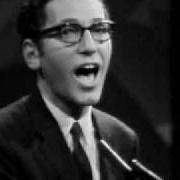
Tom Lehrer (Thomas Andrew Lehrer) è stato un cantautore, comico, pianista e matematico statunitense nato a New York nel 1920. Conosciuto per le sue brevi canzoni umoristiche, spesso satiriche e con testi intelligenti, ha raggiunto la popolarità negli anni '50 e '60. Le sue canzoni, caratterizzate da un ritmo incalzante e una melodia orecchiabile, affrontavano temi controversi come la guerra, la politica e la religione, sempre con un tocco di ironia e sarcasmo. Tra i suoi brani più famosi figurano "The Elements", "Werner Herzog's Last Movie" e "Poisoning Pigeons in the Park". Lehrer ha pubblicato diversi album, tra cui "Tom Lehrer Sings" (1959) e "An Evening Wasted with Tom Lehrer" (1965). Oltre alla musica, Lehrer si è dedicato all'insegnamento della matematica presso l'Università di Harvard. La sua carriera musicale è stata interrotta negli anni '70, ma le sue canzoni continuano ad essere apprezzate per la loro intelligenza e il loro humour pungente.

Il supergruppo di Alice Cooper e Johnny Depp è pronto a tornare in Italia con 2 date nel mese di settembre.
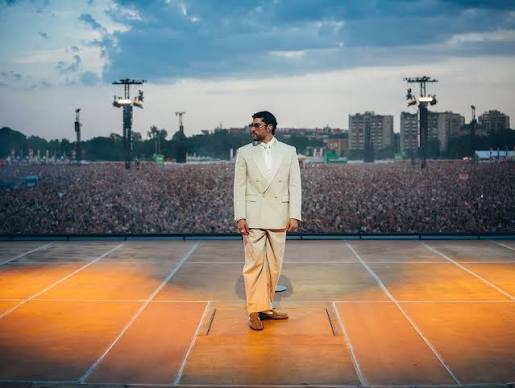
"Era uno dei concerti migliori della mia vita". Bad Bunny è tornato a parlare dell'evento tenuto sabato scorso all'Ippodromo La Maura nella zona San Siro di Milano. E la grandine riapre il problema sicurezza dell'impianto.

Noemi dovrà osservare 4 settimane di riposo dopo la caduta, ma dal 16 agosto sarà un tour de force per recuperare i live rinviati. Ecco tutte le date fino a settembre.

Lo scorso 13 luglio Paolo Belli era in bicicletta tra Correggio e Campagnola, in provincia di Reggio Emilia, per la sua solita sgambata, quando ha investito un uomo di 41 anni di nome Alessandro Mignani che, trasportato in ospedale, dopo 1 giorno in terapia intensiva, è deceduto.
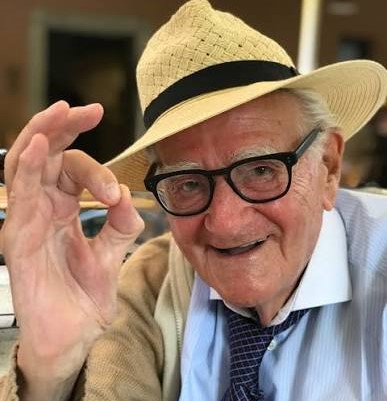
L'11 luglio Teddy Reno ha compiuto 100 anni! E' il primo cantante italiano a raggiungere questo traguardo.

Nella terza edizione di "Nuova Scena", talent dedicato al mondo rap in onda su Netflix, si sono aggiudicati la vittoria i cosentini Flextony e Tigerplug.

La radio è morta? No. Ma non è più il cancello d'ingresso. Negli ultimi anni qualcosa è cambiato ? radicalmente. Canzoni sconosciute esplodono in pochi giorni. Artisti senza contratto discografico raccolgono milioni di stream. E le radio? Arrivano dopo, non prima. Il pubblico ha preso il controllo. Il potere dei video brevi: 15 secondi che cambiano tutto TikTok ha trasformato le regole del gioco musicale. Una melodia che dura meno di venti secondi può diventare il suono di un'intera estate. Nel 2023, oltre il 70% delle canzoni entrate nella Billboard Hot 100 aveva avuto un'origine virale su piattaforme social prima di ricevere attenzione radiofonica.

Il 28 aprile 1986 la cantante Graziella Franchini, in arte Lolita, veniva ritrovata esanime e sfigurata nella camera del residence di Lamezia Terme in cui viveva ormai da un pò di tempo. L'omicidio è rimasto privo di colpevoli.

Da qualche parte nel mondo i Blue si sono riuniti davanti a uno schermo per vedere l'esibizione di Sal Da Vinci che canta "Per Sempre Si".

 Bloodlet
 Jesca Hoop
 Don Davis
 North Mississippi Allstars
 Great White
 David Lee Roth
 Jimmy Durante
 Gene Watson
 Armor For Sleep
 Eli Young Band
 Queens Of The Stone Age
 Karate High School