







She hangs her head and cries on my shirt.
She must be hurt very badly.
Tell me what's making you sadly?
Open your door, don't hide in the dark.
You're lost in the dark, you can trust me.
'Cause you know that's how it must be.
Lisa Lisa, sad Lisa Lisa.
Her eyes like windows, tricklin' rain
Upon her pain getting deeper.
Though my love wants to relieve her.
She walks alone from wall to wall.
Lost in a hall, she can't hear me.
Though I know she likes to be near me.
Lisa Lisa, sad Lisa Lisa.
She sits in a corner by the door.
There must be more I can tell her.
If she really wants me to help her.
I'll do what I can to show her the way.
And maybe one day I will free her.
Though I know no one can see her.
Lisa Lisa, sad Lisa Lisa.
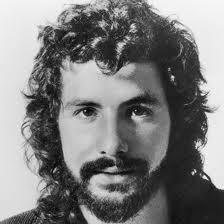
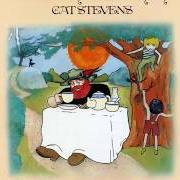
Cat Stevens, pseudonimo di Steven Demetre Georgiou, è un cantautore britannico nato a Londra il 21 luglio 1948. Attivo dal fine degli anni '60 fino al 1978, ha poi abbracciato l'Islam e cambiato nome in Yusuf Islam, continuando la sua carriera musicale con un approccio più spirituale. Stevens è noto per le sue melodie folk-rock malinconiche e introspettive, spesso accompagnate da testi poetici che esplorano temi di amore, perdita, fede e spiritualità. Tra i suoi brani più celebri figurano "Wild World", "Father and Son" e "Peace Train". L'album "Tea for the Tillerman" (1970) è considerato un classico del folk-rock britannico. Dopo il suo periodo di conversione, Yusuf Islam ha continuato a pubblicare musica con testi più religiosi, ma ha sempre mantenuto una sensibilità musicale raffinata e poetica.
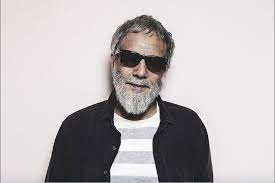
Ho letto una recente intervista di Yusuf/ Cat Stevens che mi ha molto commossa. L'artista britannico ha infatti dichiarato al Corriere della Sera, che ripensando al suo brano "Peace Train", si sente di affermare che quel treno non è mai partito: " vivere con gli altri è una vera e

 Lostalone
 Teeth Of Lions Rule The Divine
 Still Remains
 Outsider
 Dogs
 Hugh Cornwell
 Delays
 Angelis
 Nightingale
 Marty Willson-Piper
 John Parr
 The Overtones